

Статия: Carbonic maceration
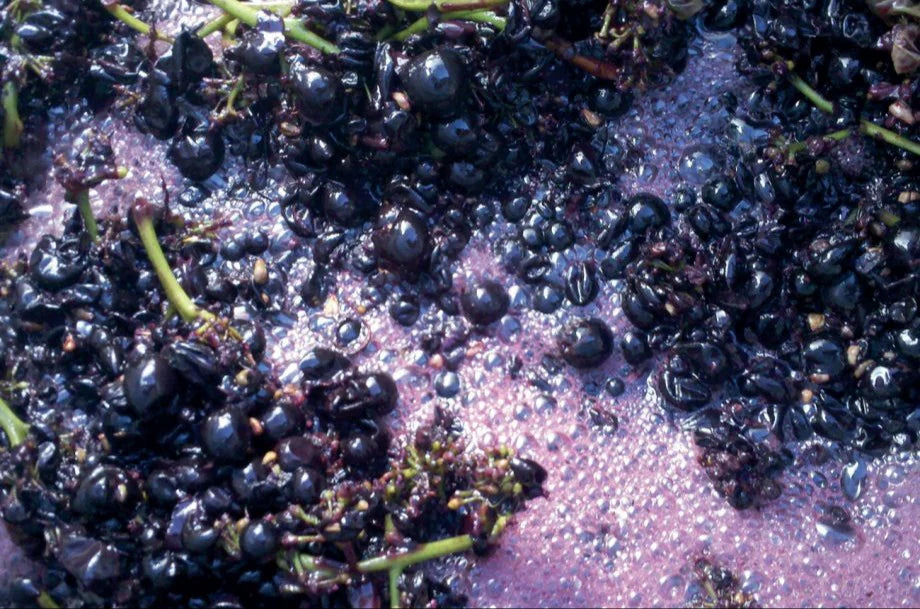
Carbonic maceration
Carbonic maceration is a specific technique in red wine production where whole grape berries ferment in a carbon dioxide-rich environment before being crushed. This method is primarily used to produce light, fruity, and aromatic red wines with low tannin content.
How the process works:
- Whole Grapes: Whole, unprocessed grapes are placed in the vessel without prior crushing.
- Oxygen-Free Vessel: The vessel is filled with carbon dioxide (CO₂) to displace oxygen and create an anaerobic environment.
- Intracellular Fermentation: In the absence of oxygen, enzymatic fermentation begins within the grape cells, converting sugars into alcohol. This occurs inside the berry itself before it bursts.
- Short Fermentation: This process lasts approximately 5 to 10 days.
- Pressing and Finishing: After this, the grapes are crushed, and the juice undergoes a short additional fermentation, if necessary.

Main characteristics of wines produced using this method:
- Fruity aroma (banana, strawberry, cherry, candy)
- Soft and velvety tannins
- Light body and freshness
- Suitable for early consumption (not wines for aging)
Advantages:
- Quick production
- Smooth taste, appealing to a wide range of consumers